Prayer is one of the most important parts of a Muslim’s daily life. Muslims do not just pray once or twice, they pray five times every single day.
These prayers help keep your heart connected to Allah, give peace and focus to your day, and remind you of your purpose in life.
In this guide, we will explain what the 5 daily prayers are, when they happen, and why prayer times matter in a simple and clear way for everyone to understand.
Read More: Prayers for Anxiety
What Are the 5 Daily Prayers in Islam?
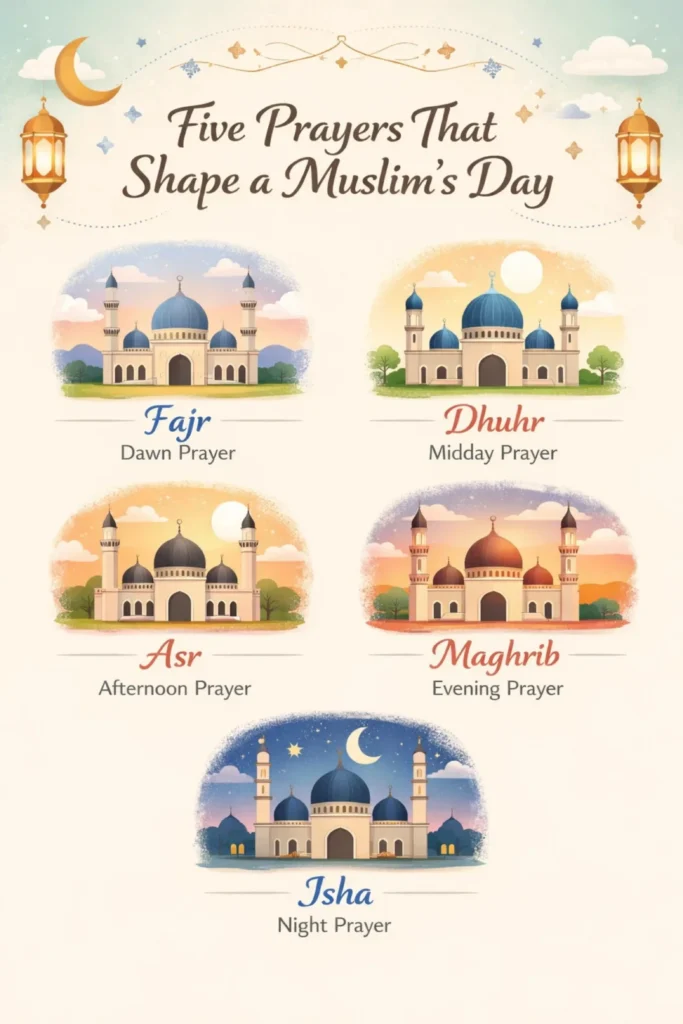
Muslims perform five prayers each day. These prayers are called Salah in Arabic, and they are an obligation — meaning all practicing adults should pray them on time.
Here are the 5 prayers:
Fajr – The dawn prayer
Dhuhr – The midday prayer
Asr – The afternoon prayer
Maghrib – The sunset prayer
Isha – The night prayer
Each prayer has a specific time window based on the position of the sun.
1. Fajr: Prayer at Dawn

Time: Begins at true dawn and ends at sunrise.
This is the first prayer of the day, done before the sun rises. It reminds us to start the day with Allah and purity.
2. Dhuhr: Prayer at Midday

Time: After the sun has passed its highest point in the sky.
When the sun is just past noon, Muslims stop to pray Dhuhr. This moment breaks up the busy workday and brings peace.
3. Asr: Afternoon Prayer
Time: When the afternoon shadows grow longer.
Asr prayer occurs later in the afternoon. It gives us a chance to remember Allah before the day ends.
4. Maghrib: Sunset Prayer

Time: Right after the sun goes down.
Maghrib prayer happens when the sun has set but the sky is still bright. It celebrates the closing of the day.
5. Isha: Night Prayer

Time: After twilight has disappeared and the night begins.
Isha is the final prayer of the day. It wraps up the day with gratitude and remembrance before sleep.
Why Are These Prayer Times Important?
Praying five times a day is not just a habit. Each prayer has great value:
Connection with Allah: Regular prayers keep your heart close to Allah all day.
Spiritual Discipline: By praying at fixed times, you build discipline in life.
Peace and Focus: Stopping your day to pray brings calm and clarity.
Unity: Muslims around the world pray the same prayers at similar times.
Do Prayer Times Change With Seasons?
Yes — the exact start and end times of each prayer change every day. This is because the sun moves across the sky differently in different seasons and in different places. So prayer times in summer may start earlier or later than in winter.
How to Know Your Prayer Times
You can find prayer times by:
Checking a local mosque timetable
Using a mobile app
Searching online for prayer times in your city
Because times change daily, it’s best to check a reliable timetable.
Are These Times Mentioned in the Quran?
The Quran talks about remembering Allah at different parts of the day — like dawn, evening, and night. These are the times interpreted by scholars into the five prayer schedule Muslims practice today.
It is the Prophet Muhammad (peace be upon him) who taught us the exact number and timing of prayers.
When Can You Miss a Prayer?
Prayers are obligatory unless you have a valid excuse, such as:
You are sick
You are traveling
You are unable to pray at that moment
Even if you miss a prayer for a valid reason, you should make it up as soon as possible.
Conclusion
The 5 daily prayers are at the heart of a Muslim’s life. They teach discipline, faith, peace, and connection with Allah. By praying Fajr, Dhuhr, Asr, Maghrib, and Isha at their proper times, a believer keeps their day grounded in spirituality and purpose.
Whether you are new to Islam or looking to improve your prayer routine, understanding these prayer times clearly can help make your worship more meaningful and consistent.

I am Mason Foster, a storyteller at heart who loves crafting heartfelt wishes, inspiring quotes, and warm messages to make every occasion special.